Custom Wine Walls in Tigard

Typical cost in Tigard

  • Open display wall, no cooling, about 100 to 200 bottles$2,800 – $8,200+
  • Cooled wall with glass doors, 4 to 6 ft wide, 150 to 300 bottles$13,000 – $33,000+
  • Large cooled wall, 8 to 12 ft wide, 400 to 800 bottles$33,000 – $77,000+

A wine wall is a wine cellar you reach into instead of walking into. We build it flush into a kitchen or dining-room wall, with the bottles at arm’s-reach depth behind insulated glass doors and cooled on their own, so the showpiece is also real storage. That keeps the cooled space small and the footprint to a strip of wall.

We also build wine walls for homes in Metzger, King City, Durham, Bull Mountain and Tualatin. A natural place for one is the run between kitchen and dining room, where the collection stays in sight every day.

Request a free quote

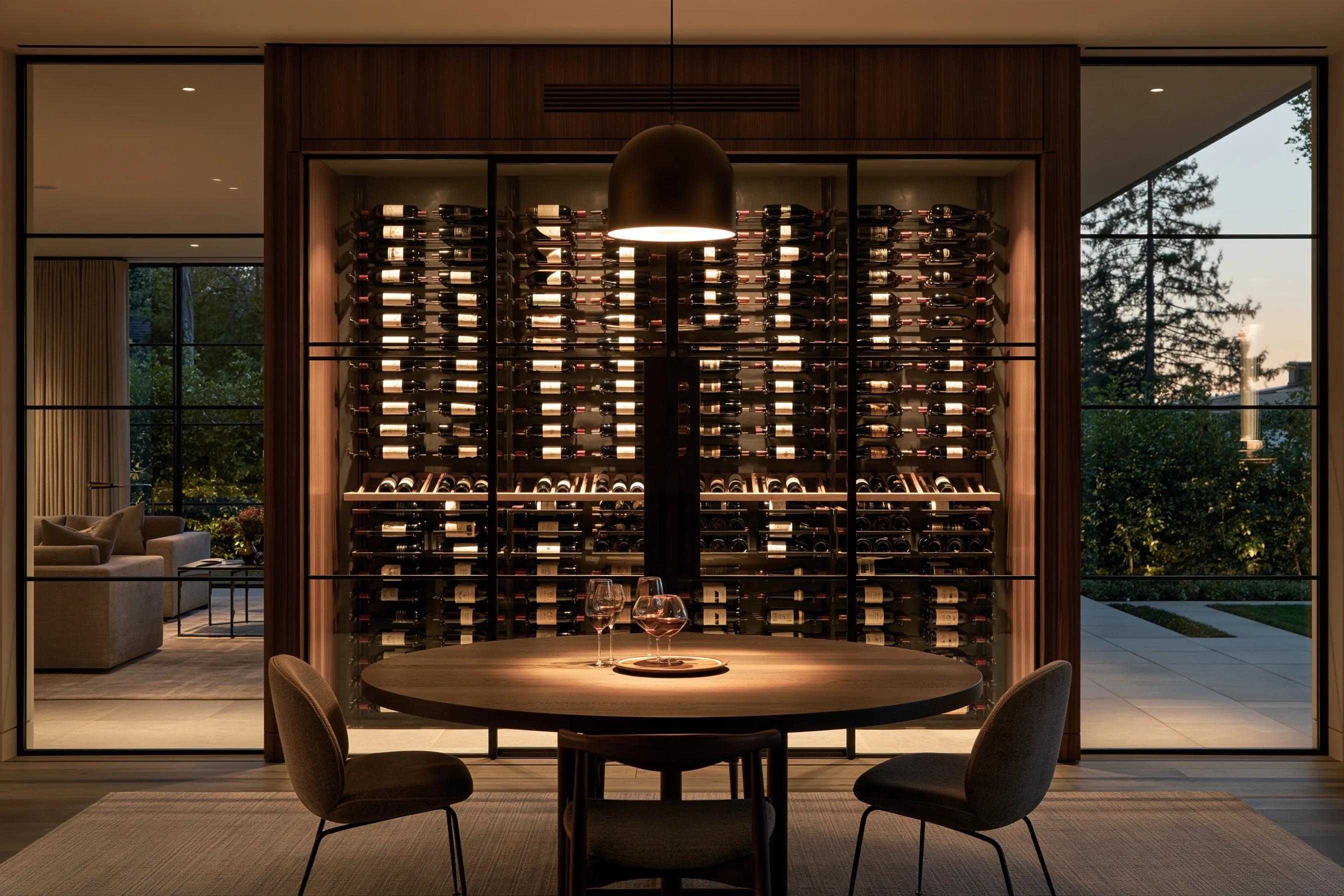
Walnut-framed glass wine wall with metal bottle racks and a slot grille above, behind a round dining table under a pendant light at dusk

Custom wine wall options

Climate-controlled wine walls

Full climate control means a shallow insulated cabinet or framed recess, gasketed glass doors and refrigeration matched to the small space inside. Some makers factory-build refrigerated wine walls and install them on site; we build ours in place with the same ingredients, assembling the insulation, vapor control and sealed doors in the wall. This is the one for bottles meant to stay for years.
Display wine walls without cooling

A feature wall of open racks, with nothing enclosing it and no refrigeration, works for wine on its way to the table. It sits at room temperature, which in a Tigard living room in July is far warmer than 55°F, and anything over 70°F ages wine too fast. Pair it with a cooled closet or enclosed wall for the bottles you are keeping.

Kitchen and dining-room wine walls

Built into the cabinetry, a wine wall becomes part of the kitchen millwork or the focal point of the dining room. We set the enclosure insulation and cooling capacity for the warmest surface the wall touches, and the unit’s exhaust stays away from the cabinet fronts.

Racking for wine walls

Metal pegs and rods turn each label to the room and suit a glass front; wood cubbies and shelves take magnums and cases. Loaded racking is heavy, so we screw pegs and frames into solid blocking within the wall, not just the drywall.

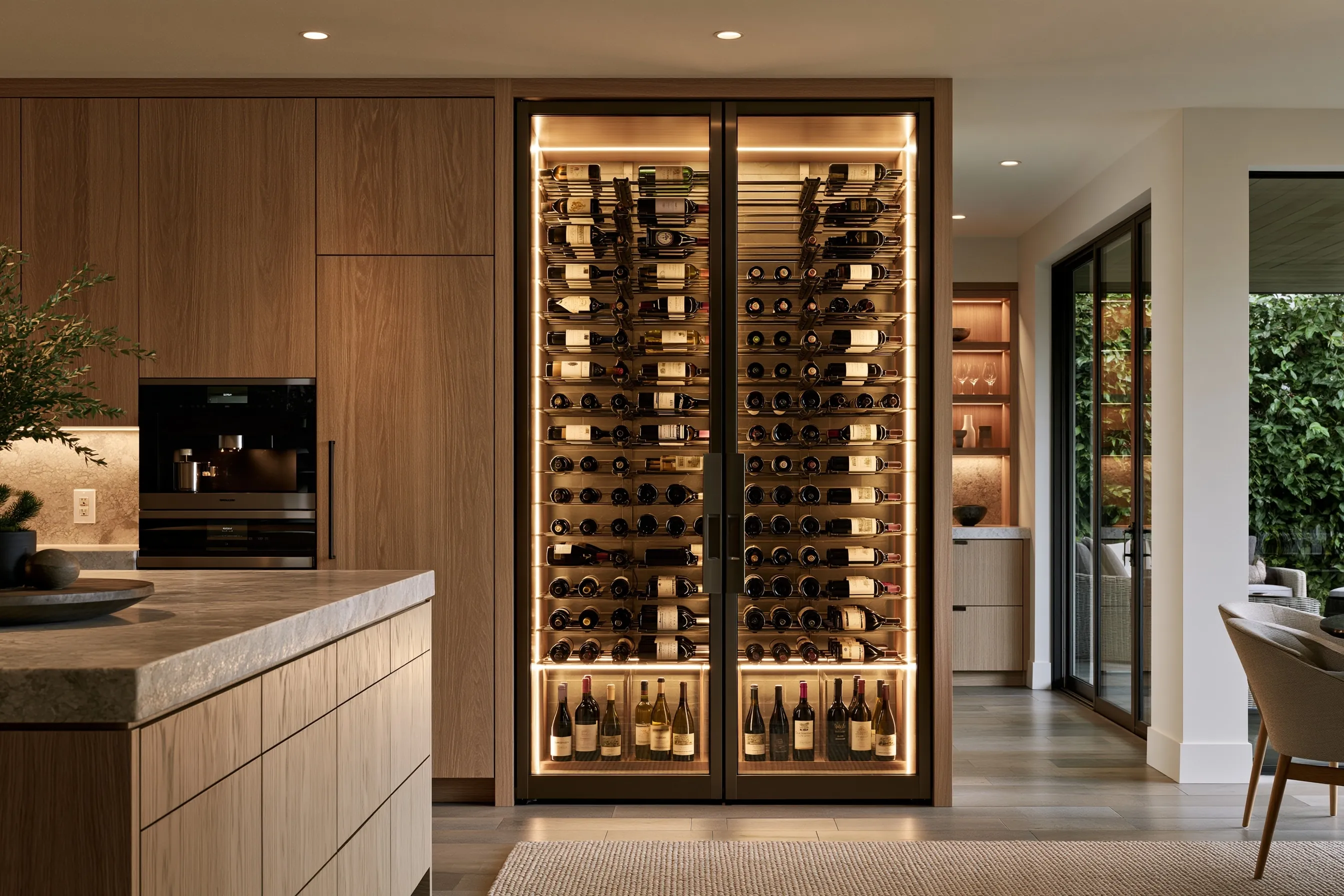
Double glass-door wine column with lit metal racks built into oak kitchen cabinetry beside a built-in espresso machine

Cooling a wine wall

A wine wall holds a small volume and needs small equipment, but the placement is awkward. A through-wall unit needs a room behind it at least as big as the cooled space, with 8 inches clear behind the unit, and a bank of cabinets cannot give it that. Ducted and split systems take the noise and heat out of the room: a duct or evaporator serves the wall while the condensing side goes to a utility room, attic or outdoors.

The cooling unit needs its own circuit and a drain line, and we plan both alongside the cabinetry.

Wine wall vs wine fridge

A wine cooler is an appliance of fixed capacity, and some models are tuned to serving temperature rather than aging. A wine wall belongs to the house, sized to the collection and drawn into the room. A kitchen refrigerator is too cold and dry for wine after a couple of months. A cellar holds a steady temperature near 55°F with humidity control.

Wine walls in single-family homes

Most Tigard households own the home they live in, and a built-in wine wall is an improvement that suits a home you own. An open kitchen and dining layout, whether in an older neighborhood, near River Terrace or on Bull Mountain, gives it an obvious place. Where a house has no basement, a wall on the main floor is the most direct spot for a cellar.

Permits for a wine wall

Cabinets, countertops and similar finish work are exempt from building permits. Wiring is different: a new permanent circuit for the cooling needs an electrical permit, and framing an insulated recess may need a building permit. Inside city limits both come from the City of Tigard Building Division; for addresses in unincorporated Metzger or parts of Bull Mountain, check Washington County’s own requirements.

Wine wall questions

How is a wine wall different from a walk-in cellar?

With a wine wall you reach in: the bottles live in a shallow, closed enclosure and you take them out while standing in the room. A walk-in cellar is a space you enter. The wall needs less room and smaller equipment, while the walk-in stores more and has space for a counter.

Does a wine wall need cooling?

Only for wine that is meant to age. Without cooling, a display wall rises and falls with the room, fine for bottles opened within months but short of the steady 55°F that long-term storage asks for.

Can a wine wall go in a kitchen?

Yes. Ovens, dishwashers and lighting add load, so we size the enclosure and the equipment for them.

Request a free wine cellar quote

Where would the wall go, and about how wide is that spot? Tell us how many bottles you want behind the glass and the address. We'll get back to you soon with an estimate or any questions we have. Estimates are free and there's no obligation.

Call (971) 387-0516

Call (971) 387-0516